Saturday, July 29, 2017

New Beginnings

Hi. Been awhile, I know. I've been busy, ok??
Sorry. Lousy excuse. I spent a large portion of my unemployed period doing..I have no idea what I was doing. Lisa got me started walking dogs with her, and I liked it. I got a job. It was very corporate, and I didn't like that. So I tendered my resignation, and decided to become a full time employee at Animal House. I walk dogs, scoop poop, feed dogs and cats, and otherwise perform tasks that were never part of either my studies at Georgetown or my culinary training.

But you know what? I am tan, getting fit, and really, really HAPPY. Yes, there are days when we have too many dogs sleeping over (last night we had 9) and some have accidents in the house, but we realize that we are doing something that makes us, the pets, and their owners happy. So we slop up the mess and move on. It's really hard to stay angry at dogs. They are all cute and wonderful.

What's that you say? Am I still cooking at all? Well, YEAH. I am doing a couple of things to keep my cooking chops up. The first thing is that I am doing some parties with a guy I met through Facebook named Paul Cullen. He lives down near the beach in Delaware. Used to be in the band Bad Co. playing bass. Nowadays, he's got an Italian food and wine business, where he comes to you house, creates a three course meal, matches wines, and then sets up his amp and entertains with his guitar while you enjoy your wine. I get to help him in the kitchen. (he doesn't let me sing with him, which is probably a wise choice.) We work very well together, and I am really enjoying when I get to do gigs with him. Hopefully, there will be many more in my future!
Here we are, making some beautiful food:

I'm still planning on teaching at Montco in the fall, too. You all know I love to teach.

Then...Lisa and I got this great idea. What if we offer a service to our pet clients where we have meals ready for them when they get home from vacation, or the work trip? I can shop, cook, and package everything, so no one has to worry about cooking when they finally get home. Great idea, huh?
I am also going to start doing some cooking class/parties. Grab a few of your friends, a couple bottles of wine, and I will come to the house, teach you how to make some awesome grub, and provide recipes. It's a really fun way to spend time with your friends. It can be dinner, or lunch, or whenever. 
I'm working on my website, which will link this blog, my Facebook page, and the site all together. It will have all the information you need to keep up with me, book a party, order some food, or just see some beautiful food pics and find some recipes. I will make a big announcement when it's ready to go. 
Look for another post very soon. I'm going to do some cooking this week, so hopefully there will be something good to talk about. Thanks for sticking with me. Great things on the horizon!
Go buy some tomatoes, some corn, some local produce before it's too late. Shop local, eat local, kiss a farmer and all that. 
Namaste, my friends.

Thursday, March 16, 2017

Using my Noodle

Big snowstorm coming. Everyone puts on a pot of chili. They also go and buy up all the bread, milk and eggs, as if these will magically disappear, and they must eat French Toast before they surely freeze to death. But I digress. Back to the chili. The chili I didn't make.

In an attempt to amuse myself while barely surviving this period of unemployment, I spent some time wandering the aisles of one of my favorite places to kill time, Assi Market. This is a Korean market that also specializes in amazing fresh produce, fresh, AFFORDABLE cut to order seafood, and about every Asian grocery item you could imagine. There is also a spot that sells small wares, in case you decide you suddenly need a set of matching chopsticks or a rice cooker. AND they have a food court, with, as you can imagine, some of the freshest food around.

Back to the snowstorm. I didn't want to make chili. I wanted to keep it lighter, and do something new.
So I bought a sixpack of ramen noodles, some dried shiitake mushrooms, a pack of fried tofu, and bean sprouts. I had miso in my fridge, and plenty of other seasonings at home. I also had some wild salmon filets in the freezer. See the plan coming together yet?

When cooking with ramen noodles, always follow this important step 1. Open the wrapper, break the noodle block into pieces before cooking, and THROW AWAY THE SEASONING PACKET. Have you ever looked at the sodium count? Yikes!

Let's see if I can remember the steps in order...
Cook the ramen in boiling water until soft, drain, rinse in cold water and set aside.

Soak the mushrooms in hot water until soft. Remove the stem and slice into strips. Or whatever other shape you fancy. Don't throw that soaking liquid away! Pour it through a coffee filter (to grab any dirt that may have been on the mushroom) into a small sauce pot. Use this as the base of the miso broth.

Miso is really easy. Since I had the mushroom liquid, I added a bit of water and whisked in some miso paste until I like the flavor.

Salmon filets have been thawing. I marinated them in a little sesame oil and soy. Then I broiled them. (heading outside the grill is not an option at this time)
I diced to tofu small, and rinsed off the bean sprouts. I blanched a couple asparagus spears I had.

Then I put it all together. The salmon was topped with a shake of my sesame/seaweed rice seasoning, and I swirled a bit of Sambal Oelek into the broth for a little heat.

No disrespect to chili, but geez, this was good. And easy. And not expensive. And pretty. And..ok I'll stop tooting my horn and post a picture.


Next time I'll show you the awesome Indian food I made last night.

Peace.


Sunday, January 22, 2017

Open Sesame

In an effort to keep from thinking about politics 24/7, I try to allow my brain to meander through the mundane. And during one of those travels in the trivial, the ol' thinker came up with this one:

"What does a sesame seed grow into?"

Then of course, I wondered why it has taken me so long to wonder that. Of course, the research commenced. So, if you never wondered or just really don't care what a sesame seed grows into, time to go back to CNN, or FOX, or wherever you get your political news fix and get back to being agitated.

Sesame is a flowering plant, native to sub-Saharan Africa. Wild relatives of the plant can be found in India and the Middle Eastern countries. It is now primarily cultivated in China and India, who supply most of the world with these little edible seeds that grow in pods on the plant. Sesame's ability to grow both in drought or monsoon conditions has made it a sustenance crop for poor farmers throughout history.

Sesame is one of the oldest oilseed crops, having been domesticated over 3000 years ago. It has the highest oil content of any seed.

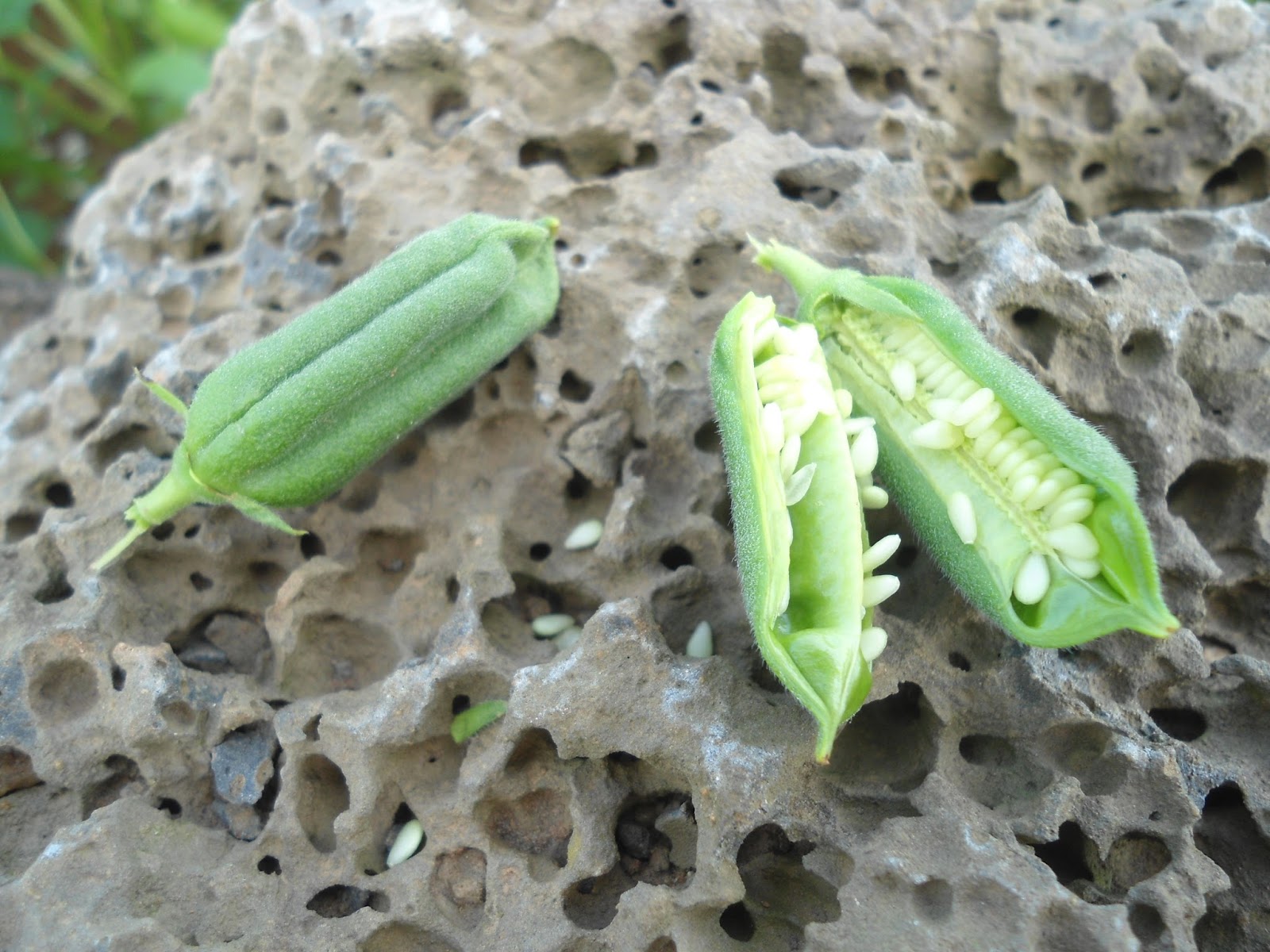
An annual plant, sesame sports tubular flowers, that can be white, yellow, blue or purple. The seeds can also be different colors, from white and tan, to brown, red and black. The seeds are found in a fruit capsule, which when ripe, will naturally split to reveal the seeds, growing in lines. When the split capsules are as dry as possible, the seeds will be harvested, cleaned and hulled.

Sesame seeds appear in cuisines worldwide, and in many different forms. In the Middle East, seeds are ground into a paste called tahini, which is a key ingredient in hummus, and the sauce that tops falafel. In Greece and Sicily, cakes and cookies are made with ground sesame seeds, or topped with them. They show up in Indian, East Asian and West African cooking. The sesame, or as the Africans called them-benne-seeds were brought to America through the slave trade. To this day, benne sticks and benne cookies are staples in South Carolina. They are also found topping burger buns and bagels.

The biggest importer and consumer of sesame seeds, however, is Japan, where they are used in so many ways. They top sushi, salads and snacks, but the most popular use is as sesame oil. Toasted sesame oil is a staple of Japanese cuisine. It is mostly added at the end of cooking to avoid flavor loss and to keep from smoking and tasting rancid. Sesame oil is high in vitamins B1 and E, magnesium, copper, calcium and iron. It is also a source of fiber and good fat.

So now you know the story behind the lowly sesame seed. I know I feel better having this knowledge. And as a parting gift, I shall leave you with a recipe for Benne Wafers. You're welcome.

Benne Wafers
Preheat oven to 375. Line sheet trays with parchment and spray with nonstick spray.

1 c. toasted sesame seeds
3/4 c. melted butter
1 1/2 c. light brown sugar, packed
1 egg, beaten
1 tsp. vanilla extract
1 c. all purpose flour (I like unbleached)
1/4 tsp. salt
1/4 tsp. baking powder

The easiest way to toast sesame seeds is to place them in a sauté pan and heat over medium heat, swirling constantly, until evenly browned. Remove and cool before using.
Combine all ingredients well. Drop by 1/2 teaspoonful onto prepared pans, leaving room between cookies. Bake for 5-6 minutes, or until just browned at the edges. Allow to cool. They will be very flat and crispy.

SAYS-A-WHO? SESAME!!

Tuesday, January 10, 2017

Keeping My Head Above Water

So, it's a new year, I am without a job, and I'm trying desperately to find something good to talk about. I haven't been cooking anything too spectacular, mostly bean stews and pasta. It's that time of year where all I want to do is braise things, make soup, and try to stay warm. In fact, I think once I'm finished here, I'll get back under the blankets and cover myself in dogs. We have four now. I know that sounds like too many, but they're pretty small. They bring a lot of joy to us. And so do the cats, I don't want to leave them out, but they're just not as snuggly.

My wife, Lisa, has a pet sitting/dog walking business, and for the holidays, I thought it would be nice to make some gifts she could give her clients. For the humans, I made some really rocking granola. It started as "hmm, what do I have in the house so I don't have to buy a whole bunch of stuff", then grew, as I realized a) how many clients she has (yay!) and b) how stinking good the granola was. Most people like granola, but don't take the time to make their own, thinking it will be difficult or time consuming. So they pay high prices for store bought stuff. Let me tell you, it's not hard to do, and home made always tastes a little better. Being the milk of human kindness that I am, I am going to share my recipe here. Ready?

My oven only holds two half sheet pans, so this is what I wrote the recipe for.

1/2 large canister rolled oats (you can use quick or original, but not instant)
2 cups sliced almonds (I use the unbalanced ones, I like the color on the skins)
1 cup unsalted sunflower seeds (shelled, please)
1/4 cup flax seeds
1 cup coconut oil
1 cup light brown sugar
1/2 cup honey (organic, if you can)
1/2 tsp. kosher salt
1/2 tsp. cinnamon
1 tsp. pure vanilla extract
2 tsp. almond extract
dried cranberries, or other dried fruit of choice

Preheat the oven to 325. Line 2 cookie pans or half pans with parchment and spray very lightly with nonstick spray.
Combine all dry ingredients (EXCEPT CRANBERRIES) in a large mixing bowl, and toss to mix.
Combine oil, sugar, honey and extracts in a small sauce pan, and heat over medium until melted together, stirring with a whisk.
Spray a rubber spatula with nonstick spray and use to scrape all of the sugar/oil mixture into the dry mix. Coat and combine thoroughly with the spatula. Divide the mix between the two pans and press down to form an even layer of granola.
Bake for 24 minutes, spinning the pans halfway through the cooking process.
Allow to cool on pans, then break apart into a large bowl and add cranberries. Store in an airtight container.

I also made dog biscuits. Peanut butter and pumpkin biscuits. They were pretty easy, too.

5 cups whole wheat flour
4 eggs
1 can organic pumpkin
1/4 cup peanut butter
1 tsp. cinnamon

In a stand mixer, using the paddle attachment, combine all ingredients. Turn out onto a board or table and roll to about 1/2" thickness. Cut out shapes using a cookie cutter. Bake in a preheated, 350 oven for about 40 minutes, until hard. Cool thoroughly before storing,

Everyone love the gifts. We bagged them up and made cute little ingredient labels. The best part, though, was all of the calls asking if the granola was for the dogs or the people. Sigh..

So that's pretty much what I've been up to. Try these recipes. Even if you don't have a dog, make some for someone who does and give them a gift. Or donate them to a rescue. You'll be a hero, at least in my eyes.

Send me good vibes in my job search, people. Please. And I'll keep looking for things to talk about. All my best wishes for a great start to a great year.
Peace.


Wednesday, September 28, 2016

Oh, Those Summer Nights

It happens every year. The summer comes to an end, and I have to say goodbye to all of the wonderful foods I wait almost 9 months for. (I just ended a sentence with a preposition, and I totally don't care right now.) The colors, textures, odors, and flavors of summer make me so happy. Bright reds and yellows, vibrant purples and greens, even little white eggplants. They smell like summer. They are fresh and crunchy. Raw, steamed, grilled...let me at those summer vegetables!
Being that my parents live on the Chesapeake Bay, there are also some other treats to savor. Like those Callinectus Sapidus-the wonderful Maryland Blue Crab. They are truly the beautiful swimmers of the bay. I had the pleasure of not just one-but TWO-crabfeasts this summer. Steamed spicy hardshells, local corn and tomatoes, and good beer. I wish I could share that experience with all of you that have never had it. Maybe the next blog site will have a "scratch and sniff" setting. Look at that beautiful thing!
I also got to make softshell crabs for dinner one night. For those of you who have no idea about what I speak (there, proper sentence structure), a crab has to molt-shed his or her shell-to be able to grow. It's really cool to see happen. Go google "molting crab" to see how they do it. Anyway, when they shed the shell, they are entirely edible. As they grow the shell back, it becomes harder to eat. This is a stage called "papery". They are still alive when you get them, and unless you are buying them prepared in a market, you have to commit their little souls to heaven and kill them yourself. I have prepared so many softshell crabs in my lifetime, but I have apologized to each and every one and said a little prayer for them. When I owned a restaurant, back in the '90's, I would serve softies every weekend of the summer season, prepared differently each time. I had customers who would call and reserve them so I wouldn't run out before they got there. It was a rare treat if there were any left at the end of the weekend. If there were, I would cook them up and we (the staff) would get to enjoy them. Softies are easy to cook. I prefer them sautéed, as opposed to deep-fried, although a fried softshell po'boy is a beautiful thing. You have to be careful when you cook them, though. They are basically balls of water being held together by a tiny bit of "skin". Know what happens when water starts to boil in oil? KABOOM. It's like flying shrapnel sometimes, so be aware if you are making them at home. Unless you like scars.
Here are my  beautiful softshells:
Fresh tomato slices on the bottom, basil-shallot beurre blanc on the top. Ermigard...

I guess it's time to start thinking about cooler weather foods, although the tomatoes and basil will keep coming for a few more weeks. The weather has finally started to cool off here, so I can turn my thoughts to chili, soup, and root vegetables. The Jewish holidays are upon us, so braised brisket and chicken soup beckon. Maybe this year I won't be as sad to see summer go. As soon as the winter solstice hits, I can start counting down to my long, sunny days and warm, starlit nights.
On that note, I think it's time for me to sign off and go make one more arugula salad with local tomatoes, cucumbers and fresh mozzarella, with dressing made from herbs in the garden. Sounds like dinner to me!
Eat well, and I'll see you soon.

Thursday, July 28, 2016

It Does A Body Good.

Hey. How ya doin? How's your summer? It's been awhile. I hope you've all been eating well and enjoying life. I've been busy, but that's a lousy excuse for not blogging. Let's see if I can catch up.

So, I've been promoting local purchasing and farm to table initiatives at work. We have gotten a new school account, and I managed to convince our VP of purchasing that it was possible to buy local and not have it affect our bottom line too much. The new school is right on the Hudson River, near NYC. That gives us a pretty good range to consider as regional/local. We had the opportunity to do some farm visits and learn about the small farms that are still in operation in the Hudson River Valley and out on Long Island. It was an amazing trip, and I wanted to share a little of what we got to experience with you all today.

First, there is Hudson Valley Fresh, a dairy cooperative dedicated to preserving the farming heritage of the area. They support sustainable farming, the preservation of over 5000 acres, and provide a living for a select group of small farms that meet their stringent standards. The organization was founded by Dr. Sam Simon, a retired orthopaedic surgeon who began life as a dairy farmer, and returned to his roots. Everything about HVF is top notch. They set the standards for quality and freshness. They ensure that their cows are healthy, comfortable and well fed. Their motto is: More comfort+less stress=better tasting milk.

And let me tell you, this is some good tasting milk! I am lactose intolerant, so I only tried a sip of the chocolate milk, but...OMG this stuff tastes like a milkshake made by angels! My travel companion vouched for the quality of the whole milk, and we did get to try some of the yogurt, which was also delicious. The best part of the visit, though, was having the chance to see one of the farms and meet not only the farmers and their family, but the cows. Jim and Jen, and their children, Jenna and Justin, welcomed us onto their farm and introduced us to their herd. Getting a chance to talk to people whose love for animals and the land was inspirational. I have such respect for these folks, and am honored to have had the opportunity to meet them. And the cows.

If you ever find yourself in the Mid-Hudson Valley, Long Island, New York City or select parts of Connecticut, and see Hudson Valley Fresh Milk on the grocery shelves, grab some. Especially the chocolate milk. I kid you not. It's da bomb. Visit their website: www.HudsonValleyFresh.com to learn more than you ever thought you wanted to know about dairy farming and milk.

That's all for today, kids. I'll give you the rest of the farm tour next time, when we go out to Long Island and visit some of the few remaining farms out there. Until then, be well, eat well, drink well.


Sunday, March 27, 2016

Me Gusta Mucha

A few weeks ago, Lisa and I had dinner at a Taqueria in Conshohocken, PA. Well, we tried. It was so crowded, we ended up getting takeout. It was the most authentic and delicious (and affordable) Mexican food I have had in memory. Nothing bothers me more than overpriced, mediocre Mexican food. Ok, maybe overpriced, mediocre Italian food. But you get my point. There is so little authentic ethnic food of any type around, it is wonderful when you find it.

One of the dishes we got was Sopes. Sopes are little disks of joy, made from Masa (corn) flour and water. They're kind of like little, thick tortillas. You toast these little guys, then top them with all kinds of wonderful stuff. They were so good, I wanted to make them at home. Luckily, I have a market nearby that sells real Mexican items. I got the Masa, chorizo, canned tomatoes with chilies, and queso fresco.

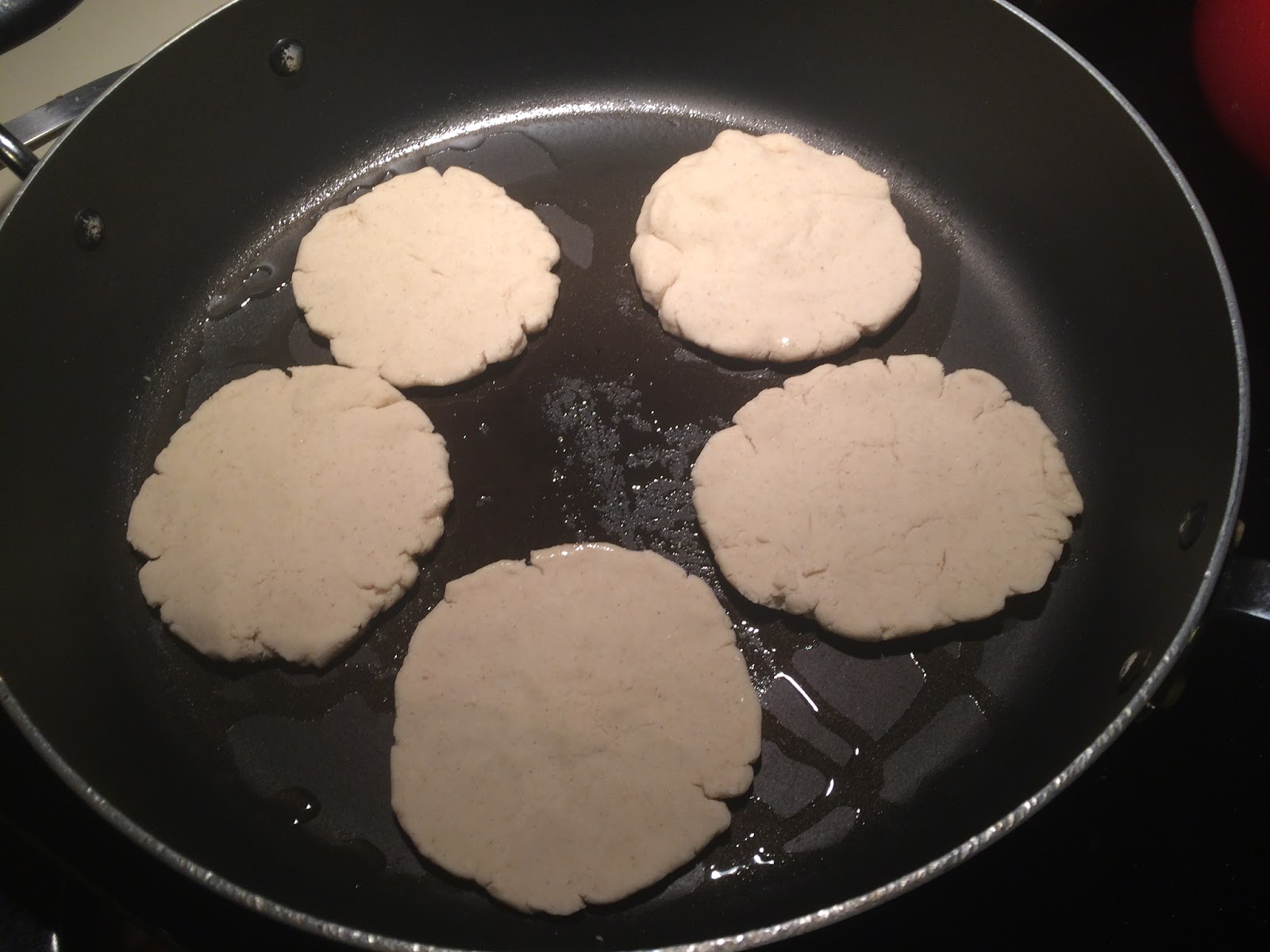
Nicole and I decided to have a girls night, cooking together and watching a movie. She was into helping with this project. Let me tell you, this is one EASY dish to make. The recipe for the dough is on the back of the Maseca bag. Like I said, it's just flour, water and a pinch of salt. You make the dough, form balls, and pat them into disk shape. Then, they get toasted. If you have a griddle, that's really the best place, but I don't, so I use my all purpose fry pan.

Easy, no?
You just let them get a little crispy on both sides. While Nick was making the sopes, I cooked some chorizo, heated some refried black beans, and some canned tomatoes with chilies. We shredded some iceberg lettuce, crumbled the queso fresco, and brought out the sour cream ( which to Nicole and me is a food group all in itself). 
And whoot, here it is!

By the way, we watched "Pitch Perfect 2", a perfect movie for a mother-daughter night.
Next week, we're making these again, with some pulled chicken. They're also really good with no meat at all on them. We're going to make a bunch of them and keep them in the freezer for instant gratification snacks.
Go forth. Make sopes. Arriba!

Monday, February 8, 2016

Make Some Gumbo/Roux the Day

Laissez Bon Temps Roulez and all that! It's one of my favorite times of year to eat. I don't really need an excuse to make New Orleans food, but somehow, it's better at Mardi Gras time. And it's also some great Superbowl Sunday fare.

I'll be honest; the seed that grew the idea for this gumbo was finding a giant bag of frozen okra at one of my local stores last month. It used to be easy to find okra around here, but it seems like it has become a hard item to locate these days. It has migrated from the frozen vegetable case down into the frozen Hispanic items. Don't ask. I don't know.

Oh, and once upon a time, you could get gumbo file powder up these parts. File (pronounced feelay) is powdered sassafrass. It adds that certain "je ne sais pas" to gumbo.  I have a bottle hiding in the back of my spice cabinet for just these occasions. Some say it is the secret to the perfect gumbo.
I'm here to tell you the real secret to the perfect gumbo.

Ready?

It's the roux. Any self respecting cook or chef from Nawlins knows how to make a Cajun roux. The first ingredient is patience. There's no rushing the nutty smelling, tawny brown perfection that is the roux. In so many dishes, roux is used simply as a thickening agent. But Cajun roux is so much more than that. It adds flavor and color along with texture. No butter here. Oil and flour. Cook over medium heat. Stir. Stir. Stir. It gets golden, then darker, but not burnt. It starts to smell like toasted hazelnuts. Don't rush the roux.

The next "must-haves" for gumbo are onions and celery, diced small. Some recipes call for green pepper. I don't like green pepper, so I use a red pepper. You can use a mixture of peppers if you like. Stir the diced vegetables into the roux. Once they are incorporated together, add some of the file powder, some cayenne pepper, and salt.  Next, some Andouille sausage. I found some nice turkey Andouille, so I use that. Dice it up and toss it in. Chicken. I use boneless thigh meat, trimmed of fat and diced. I find that breast meat can get dry, but feel free to use it instead. Here's what it looks like at this point. (I forgot to take a picture of the roux cooking, sorry.)

See, there's the Gumbo file powder in the background. Ok, now add some chicken stock. Stir with a wooden spoon, getting all of the roux up from the bottom of the pan. Add some dried thyme and some tomato paste. Since I am a big tomato fan, I also use some diced tomatoes. Stir, let simmer for a bit, then add some of the frozen, diced okra. For those of you who don't know, okra is a vegetable. It is the seed pod of a plant which grows in the temperate climates, and is especially drought resistant, making it a staple of African food. It can be fried, pickled, sautéed, or sliced and used in gumbo. And here's the cool part of it. The inside of the pod contains a sort of "goo" that helps thicken the sauce, and the pod itself gives an nice snap if not too overcooked.

I put shrimp in my gumbo too, if I have it. And I did. So I did. But don't add the shrimp until later, or they will get dry and chewy. If you're feeling particularly regional, and can find them, you can put in crawfish tails. Not my thing. Here we are, a' simmering. Look at that golden color!

Now, the big decision. Do you put the rice IN the gumbo, or serve the gumbo on top of the rice? Is this REALLY the biggest decision you have to make today? I am completely ambivalent  on this one. Sometimes, I put it in, sometimes, if it's thick enough, I just put it over cooked rice. White rice. Brown rice. You pick. I used white rice this time.
Here's the finished product. We added some  Tabasco, because we like an extra kick. It was VERY good, if I must say so myself. I'd hold it up to a genuine New Orleans gumbo.
It's not hard. Seriously. Make some gumbo. Let the Good Times Roll.

Chef Cochon gives it the seal of approval. Enjoy your Mardi Gras. Or make it whenever you feel like it.
See you soon. I promise. No more lazy writer.

Saturday, October 31, 2015

I Heart Cauliflower

Cauliflower has become the new darling of the culinary world. People just keep discovering new and wonderful ways to prepare it, and I for one, couldn't be happier. I mean, I could eat oven roasted cauliflower florets for breakfast, lunch and dinner every day. But I have to give major props to those folks who are doing really interesting things with this cruciferous treat. I've tried a few; I've made cauliflower pizza crust (good, but a lot of work for a little pizza), roasted a whole head of cauliflower and cut it into "steaks" to use as the center of the plate for dinner, made cauliflower "rice", and the other night, I made an alfredo type sauce out of pureed cauliflower and potatoes. That's the one I'm going to talk about here, because it's going to be one of my favorite easy "go to" dinners from now on.

Let's take a look at cauliflower first, shall we? Image result for cauliflower
Pretty, huh? Wait, check out the Romanesco variety:
Image result for romanesco cauliflowerHow cool is that?
Cauliflower is part of the Brassica Oleracea family, which also includes broccoli, Brussels sprouts, cabbage, collards and kale. The vegetable dates back to the 6th century BC. It originated in the Middle East, and was brought to Western Europe in the 16th century. In the 1800's, the British introduced it to India, where it has become a staple of their cuisine.
Cauliflower is low in fat and carbohydrates, and high in fiber, folate, Vitamin C and Vitamin K. Studies are showing that it has both antioxidant and anti-inflammatory benefits. Also, since it is a good source of fiber, it helps support digestive health.
Oh, and it's delicious.

So, back to my "Alfredo" sauce. I took about a half a head of cauliflower, broken into florets, and two medium sized peeled and diced Idaho potatoes, a couple cloves of garlic and threw them into a pot. I covered them with vegetable stock and boiled until they were soft. Then, I pureed the whole deal, and seasoned it with a little salt, pepper and nutmeg. This all can be prepared in advance of the meal.
I cooked up some fettuccine. While that was boiling, I dipped a small strainer with broccoli florets into the pot to blanch them. When the pasta was done, I drained it (saving a bit of the cooking water) and dropped it into a big mixing bowl. I added the broccoli, enough sauce to coat, a little of the leftover pasta water to thin it a bit (this is optional) and some grated Parmesan and Asiago cheese. Tossed the whole deal around in the bowl with a pair of tongs until it was well coated, and rechecked the seasoning.
 
Now, I'm not going to say that it tastes like it has cream in it, but since I am lactose intolerant and don't eat true Alfredo sauce, I don't care. It DOES have a really nice, rich vegetable flavor. In fact, all three of us had seconds! It's vegetarian, but you can add chicken or shrimp if you like. Oh, and if you don't use all of the sauce, just heat it up and eat it for soup!
 
Yay cauliflower!
 

Tuesday, July 14, 2015

To Eat. Or Not To Eat. That is the Question.


I don't know if any of you are paying attention to all of the hoopla surrounding quinoa these days, but there have been a number of articles in various newspapers and magazines arguing the sociological, economic and environmental effects of quinoa production in Peru and Bolivia. The New York Times published an article stating that the rising global demand for quinoa was inflating the price so that the indigenous populations couldn't afford it any longer. This had them turning to cheaper foods, and was contributing to the decline of their historical culture. Of course, I believed every word. I mean, it's the NYT for cripes sake!

Other articles were written in dispute of this. Yes, I googled it. But I read a number of different pieces, which offered vastly differing opinions. I'm riding the middle, because I don't want to start a fight with anyone. (although I can't imagine anyone wanting to punch me over quinoa)

Here's what seems to be going on down on the Altiplano-the high plains region of the Andes Mountains. This is the area of the world that seems most suited to the growth of quinoa. It is some harsh territory up there, but somehow, this hardy plant thrives.  The issues that are being raised are the following:


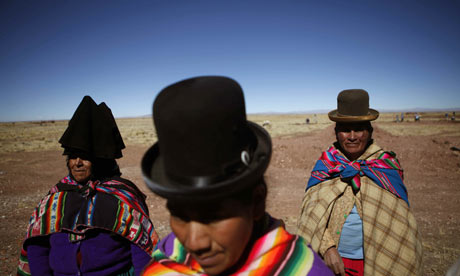
The worldwide demand for quinoa is making it too expensive for the farmers themselves to afford to buy. As this has been the staple of their diets forever, the argument is that they are now turning to other, less nutritious foods, and it is having an effect on the population. However, the facts seem to show that the farmers set aside one tenth of their harvest for themselves, so they don't have to purchase it as a finished product on the market. Just because they wear those goofy hats, it don't mean they're no dummies!


The upside of the demand is that they are able to improve a bit on their lifestyle. Schools are better, their houses are a little nicer. I mean, we're not talking about these people erecting McMansions or anything. Just a little more mud on the hut. And my guess is there's not much cell phone service up there, so it just doesn't make sense to be holding the new iPhone 6. The worst thing that is happening is that the younger generations are less inclined to have quinoa be the center of their diet.

Then there are the llamas. It seems that many llama farmers are selling off their herds to make room to grow more quinoa. Andean people eat llama. (does NOT taste like chicken, I would guess). There is a symbiotic relationship between llama herding and quinoa farming, rotating the land to keep it fertile. One of the greatest sources of pride regarding Andean quinoa is that it is completely organic.If they change the farming rotation, then they would have to use fertilizer. So, my Andean friends, let's keep those llamas coming!
Here is a llama for you:

Apparently, attempts are being made in other parts of the world to grow quinoa. Some is now produced in the Pacific Northwest, and they are trying in Britain and the Middle East. But nowhere is there the perfect storm of altitude, weather and sheer space that is found in the Altiplano. (for you non-Spanish speakers, that means "high plain") There is no agribusiness evil giant controlling the farms, no GMOs (and you ALL know how I feel about GMOs). It is all controlled by producer's associations and farmer's cooperatives. There is government support, both politically and financially. So let's keep buying fair trade quinoa, people. I know it's kind of pricey, but if you've read my blog entry all about its nutritional content, you will know that it is an almost perfect food. Heck, I just bought a Greek yogurt from Sheetz the other day that had quinoa in it! It was like having pop rocks in your breakfast. But talk about a protein packed way to start a day!
Eat Quinoa. Save a Llama.
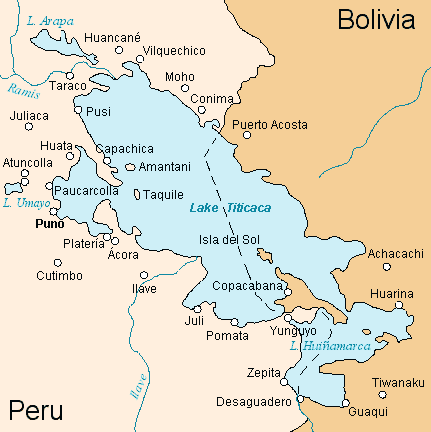
And here's a picture of Lake Titicaca. It's found between Bolivia and Peru. (The Animaniacs taught me that) Why did I put this in? Well, like Yakko, Wacko and Dot, I just like saying its name-TITICACA!


Thursday, July 9, 2015

Reunited. And It Feels So Good.

"It's been so long since last we met.." Oh wait, never mind, that's the Georgetown fight song.
Holy shamoly, it's been a long time since I last posted. Let's see, what's my excuse this time? Umm..I have none. Since I was last on here, I have gotten a new position with the company for whom I work. I am now the Executive Chef for the Independent and Boarding school division of Brock and Co. That said, I do have a BIT of an excuse. I spent most of May and half of June driving around visiting the schools we have. I have been to Boston, Western Mass, the Hudson River Valley, Greenwich and Farmington, Connecticut, Western PA, Western VA and Raleigh, NC. That's a lot of driving, my friends. It has been a fantastic experience so far. I have met some dedicated culinarians that are the chefs at our accounts. They are passionate about food, sustainability, AND love the kids. Some are lucky enough to be in areas where they can take advantage of the local farm culture. Some mentor students in work study programs, watching them move on to schools like the CIA. I am looking forward to the fall when I have a chance to really dig in and spend time at each and every school.

One of the challenges that has arisen in foodservice today is attempting to be as proactive as possible (or at least as quickly reactive) to requests from our clients (whether administrators, students, or parents) for information about the food we purchase and serve. In the school environment, providers must be extremely aware of the increase in food allergies. I actually just finished my ServSafe Allergen Awareness training. (I aced the exam.) Everyone who is involved in any aspect of food service must have knowledge of the widening spectrum of food related allergies and how to react if an emergency occurs. Label reading has become one of the most important parts of food purchasing these days.

Ok, that's really not what I set out to talk about. My point was to focus on the fact that people are becoming (FINALLY) aware of what is going on with how their food products are raised and/or grown. Questions are being asked about cage-free eggs, antibiotic free poultry, GMO free cereals and other goods. I'm not sure if all of you know how passionate I am about the evil empire that is Monsanto. Let me put it this way, if it is true that my girl Hillary is in bed with Monsanto, I will ride the Bernie train all the way off the rails and into the ravine. I believe that the original idea of genetically modifying crops to provide a steady source of food for an uncontrollably expanding world population-crops that were drought resistant, bug resistant, flood resistant-was a theoretically good idea. But as Monsanto fiddled with plant DNA to make it resistant to the freaking RoundUp pesticide it invented to kill weeds, they created Frankenfood. Not only that, they became so proprietary that they made it their mission to put farmers that were using heirloom seed and not Monsanto seed out of business, through lawsuits and land grabs. I could talk for hours, but you can read about a million articles online. Science is beginning to show that these modified plant materials are adversely affecting the human body in many ways. Again, read more on your own, ok?

As food providers, we need to join together and put demands on the supply chain. Large companies (Chipotle, Panera, even McDonald's) are starting to demand purer foods from their suppliers. Their customer base wants antibiotic free meats, non-GMO wheat and corn for the baked goods, sustainably farmed produce, grown without chemicals.

THE DOMINOES ARE STARTING TO TOPPLE, AND I COULD NOT BE HAPPIER.

 As usual, Western Europe is years ahead of us on the curve. They have been saying no to "scientifically enhanced" food for years. Time for us ugly Americans to wake up and realize what is going on. We feel like crap because we are eating crap. We are allowing big agribusiness (and its lovely spouse, government) to dictate what we are eating, while destroying the American farm industry. Grow GM corn, force feed it to cows kept in feed lots. GM wheat. GM soy. Welp, there you have it. That's what we are eating, whether it comes directly to us through the plant product, or hiding in the beef, poultry, pork and even fish that we consume. Enough to make you sick, huh?

I realize that not everyone has the financial or geographical ability to shop local, or at a grocery like Whole Foods (ok, ok, I know they have been price gouging) or FreshMarket. I have finally decided that I can make sacrifices in other places so that I can buy farm eggs, free range and grass fed meats or poultry, and non-GMO products. I have become an avid label reader. Shopping with me can take hours now..
There are many different reasons why you may choose to make these changes in your life. Many people are concerned about what the chemicals, or the modified plant DNA will do to their (or their childrens) bodies. Personally, my concern is more for the humane farming of animals, and the belief that we shouldn't mess with Mother Nature. (see, that 70's margarine commercial was right!) This is the only planet we have; humans have to stop being so damn controlling. And...if you don't really care about what you eat or how it was grown..please stop reading my blog!

Get involved. Somehow. Ask questions. Read labels. Shop local farmers. Hug a tree. Join a CSA. Save a honeybee.
If you need me, I'll be in my backyard watching to see if any bats have settled into the bat houses my neighbor and I put up in the woods.
Until next time. Eat well.

Sunday, March 1, 2015

"Those who CAN do, teach"

One night a week, I have been teaching culinary arts at Montgomery County Community College.  They built a really nice culinary school about 5 miles or so away from their main campus. Everything is shiny and new, including the student body. I haven't taught a cooking class in almost 15 years. (wow, is that possible? time moves so quickly) I was a little rusty on the first class, pretty much because I didn't know the ins and outs of this program. Things have changed so much since last I taught. No more file folders crammed with outlines, pictures, and notes to copy and hand out to students. Nowadays, everything is on a teaching tool called "Blackboard." As a teacher, you can post the syllabus, announcements, tests, quizzes, homework, etc. The students can do their homework assignments, take quizzes, blog, do a journal, access the textbook..everything is at their fingertips. They still get a textbook, which comes with a website and a code by which they can see and print anything they want, like the recipes for the day's class.
No more chalkboards, or overhead projectors. There's a magical thing called a "smartboard". You project what you want to show from the computer onto the board, then you can actually interact with it by just touching the board, just like a touchscreen phone or iPad. It is really cool.

Oh boy, what kind of looks do you think I'd get if I told my students about how it was an honor to get to stay after class and "clap the erasers" out the window in elementary school...

My students vary in age from mid 20's to mid 30's. They all have different skill levels at this point, but are all pretty motivated to learn. I had forgotten how overwhelming all of this information can be to someone who hasn't been immersed in it for 30+ years. I learned most of what I know on the job when I first started out. I was extremely lucky to have had a mentor named Valerie Erwin to teach me. Val could be blunt, a little harsh, but had a big heart and a lot of knowledge to share. She taught me how to butcher meats, knife skills, garde manger, and line cooking. I learned the basics of sauce making from her, too. And then....well, let's just say, repetition is an excellent teacher.
I had the opportunity to refine my skills in France at culinary school. Many of the students there were just beginning, but I had been working for over 5 years already, and at the time I went, was working in a French Bistro, making stocks, sauces, charcuterie, and butchering. Because I was ahead of the game, I let the others do the basic work, and I attempted the things I hadn't done yet. It was a great experience.

Yep, I drifted off again. Sorry. Enough about me, this is about my students.

The class I am teaching is called "Advanced Culinary Skills". Not sure why, but it is. It's still pretty basic stuff. The whole semester is devoted to the preparation and cooking of different meats, game, poultry and fish, with a brief foray into eggs at the end. We have spent the past 4 weeks on meat; beef, pork, veal and lamb. I do most of the butchering, showing them how to break down the different cuts, then we go over the recipes and they split into groups and make them. Sounds simple, huh? I have to keep reminding myself that a) these are rookies, b) this is the first time they are seeing recipes like this, and c) they are not thinking like chefs yet (meaning, their organizational skills)
I walk around to each of the groups and spout my pearls of wisdom, helping where needed. Then, finally, there is turnout, where each group presents their dishes. If it is one recipe they have cooked, I ask for two different presentations, but most often, I have given them two different things. One is a recipe from the book and the other is their own creativity. I want to see what is brewing in their heads. We present on a large table and look at each dish together. We discuss how it was cooked and the visual appeal of the dish. Then we try them all. They are getting much better at everything, so I guess I'm doing my job.


Before we hit the kitchens, though, we have an hour in the classroom with the aforementioned smartboard. I pull up the recipes and some videos of technique, but most often, I go off on a tangent. Well, it's not a tangent as much as it is simply "off script." Anyone can teach straight from a textbook. Being a chef isn't just about making recipes and learning how to carve a chunk of meat. I truly believe that, as a foodservice professional in this day and age, you have a responsibility to  yourself, your clientele, and the world, to understand where the food you are preparing comes from. Let me say that in capital letters:

PEOPLE SHOULD KNOW WHERE THEIR FOOD COMES FROM, HOW IT IS RAISED, GROWN, HARVESTED, PROCESSED, PACKAGED AND OTHERWISE HANDLED FROM BEGINNING TO END.

And they should have an opinion about it, whether or not they choose to share it. Anyone who has spent any time with me knows that I can't keep quiet about it. Most of my lectures are about the meat industry, the huge agrifarms where animals are basically stuffed full of corn and antibiotics, tortured and mishandled, and then end up in plastic sealed Styrofoam trays under fluorescent light to look all yummy for the consumer. I'm pretty sure no one in my class will eat veal again, after they learned how they were raised..

I'm not going to keep preaching here. Go buy "The Omnivore's Dilemma" by Michael Pollin.

The point of this whole thing was to talk about how much I enjoy giving back-teaching, mentoring, enlightening and otherwise entertaining my students, my employees, my friends who will listen. And you, who choose to read my blog. I appreciate it! I am starting a new job in a few weeks, where I will be out of the kitchen and on the road, as a executive chef for the school division of the company for which I work. I will have much more time to be on the computer, so I look forward to having the chance to blog MUCH more often. Until then, stay warm, eat well, and think good thoughts.


Sunday, December 28, 2014

Looking Back, Looking Forward

So, is everybody still full from the holiday madness? Christmas cookies, potato latkes, briskets, turkey, pie, eggnog...what have you. I know, New Year's Eve is right on the doorstep; the last big blowout before the resolutions and diets begin. But I thought I'd start thinking about 2015 now. I think I am anxious to put this year to rest. It started out great, but is losing steam in these last few weeks.
Things have been weird here in the Animal House. Lots of unrest I'd rather not get into. Suffice it to say that I have sort of circled the wagons and have not done a whole lot of shopping for food. So I haven't done much cooking to brag about. I did, however, make a bitching batch of granola today. I've been threatening to do that for awhile, and I found myself with time to do it. It was a great way to clean out the cabinets and fridge. Here's what I found to throw in a bowl:
Regular oats (not steel cut) I guess it was about a quart
Some pepitas, chia seeds, chopped cashews, chopped raw almonds, cactus honey powder (think agave sugar) and flax that has been living in the back of my refrigerator forever
Then I combined:
About a 1/2 cup of vegetable oil, the rest of a bottle of flaxseed oil that was also living in the dark recesses of the fridge (it was only about a teaspoon), about a tablespoon of vanilla, a shot of maple syrup, and about a 1/4 cup of what my sister-in-law calls peach syrup that she cans.
I mixed all the wet and dry together, spread on an oiled sheet pan, and cooked at 250 for about 2 hours, stirring every once in awhile. Once it came out and cooled, I added all of the last bits of all of the dried fruits I've been keeping; craisins, cherries, blueberries and chopped up apricots.
Holy cow is this stuff good! I had some this morning with a dollop of coconut Greek yogurt. Lisa had two bowls with almond milk.
Let me tell you something, when you put that much flax into your breakfast, your stomach makes interesting noises for the rest of the day...
Ok, let's change the subject. What are you all doing for NYE? I never go out. I spent most of my life working in a kitchen on the big night, so ended up ringing in the new year with my restaurant family. Now that I no longer work nights, I prefer to stay home. Last year, I made a big fancy meal with oysters, lobster risotto and chocolate peanut butter mousse. (check out the blog entry) This year, I think it will just me some snacky foods.  A big bowl of steamed edamame with sea salt, some Old Bay and garlic shrimp I will wrap in foil and cook on the grill, probably some bruschetta with tomato topping and an artichoke topping. Who knows what else? We will see where the mood (and about 20 bucks) takes me. I already have the bubbles chilled. Last year for my birthday, my friend Suzie Rogers gave me a bottle of something called "The Chook". It is a sparkling shiraz; red, dry and delicious. I've been saving it for...oh hell, I've been saving it for too long, it's time to enjoy it. As we did last year, Lisa and I will have a rousing game of Jenga. Maybe we will even stay awake to watch the ball drop. Maybe not. Call me old, but it's really losing its luster since Dick Clark left us.
Anyway, I want to get my you-know-what back together in 2015. The usual stuff; eat healthier, drink less, exercise more...but more than that, I want to work on my inner self. Lisa and I have started going to Quaker meeting on Sunday mornings. That one hour every week to sit and think is giving me time to revisit myself, my priorities, my values, and my place in this world. I don't want to spend the rest of my life working to pay bills. There has to be more. It has to be better than that. And I have to be the one to find it. No one is going to hand me the answer.
I will blog again very soon, and not be so maudlin. I'm not depressed or anything. I just want to do better. Don't we all? I am going to try to live the three basic tenants of Judaism:
Tzedakah- giving of myself to others
Tfilah- continuing to learn and study
Tikkun Olam- repairing the world, as best I can from my own little perch

Maybe we can all try to do these things, huh? I wish you all peace and happiness, success and love, and all things good for 2015.

Saturday, November 29, 2014

Thanks and Stuff(ing)

Five years ago today, my best friend and work husband, Ken, died in a motorcycle accident. I still miss him terribly. We became inseparable after only knowing each other for about 24 hours. It was an awesome friendship that ended after only 6 months. He is buried very close to my house, so I often do my run through the cemetery and leave a stone on his grave. And yell at him for leaving me so soon. I did that this morning.
I am grateful that I had Ken Fisher in my life for even that short time.

Last night, I met my high school friends for dinner. They all come home for the holiday, and we try to have one night to see each other. It was wonderful. We spent some time lamenting hot flashes and other maladies, but mostly just laughed and talked. Our lives have taken us all in many different directions, but I feel like we have all gotten better as we have aged. I treasure that one evening, those few hours.
I am grateful to have Lynn Grossman, Gayle Rosen, Judy Saltzburg and Rachel Selekman in my life, and hope to have them there for a very long time.

For Thanksgiving, my kids and I went to Dad and Linda's apartment up here in Penn Valley. Linda got a free range turkey from a farm in Maryland, and Dad made his famous oyster stuffing. Linda also made cranberry relish and her delicious apple pie. I was in charge of the rest.
I love Thanksgiving food. I could made an endless array of side dishes, but I had to keep it in check, because there were only five of us. Will wanted the mashed sweet potatoes with marshmallows toasted on top, so I did a small pan of them. I mean really, who doesn't love that stuff? Nicole wanted the roasted root vegetables. Turnips, parsnips and rutabagas, tossed in olive oil and a whole bunch of stuff I found in my cabinet: salt, pepper, garlic cloves, chipotle chili flakes, mixed dried herbs...I diced them small and cooked them a long time so they got all sweet and caramelized.
As much as I like oyster stuffing, I still love my good old sausage stuffing, so I made some of that. And this year, I did something new for a green vegetable. I shredded Brussels sprouts and then blanched and refreshed them, so they were nice and green and still a bit crunchy. I added dried cranberries, orange zest and made a little dressing of orange juice, lemon juice, extra virgin olive oil and salt. At the very end, I hit it with a bit of aged balsamic vinegar to give a little sweet zing, but not too much to turn it brown. Even the kids ate it!
The turkey was the best I've had since the all locally sourced meal we made at my brothers a few years ago. It was flavorful and juicy and didn't taste like cardboard.
So now let me say that I am grateful for my family, the cute dogs, and the turkey.

Lisa went to her family's gathering. We have agreed that we would never put demands on each other to try to compromise any traditions, and they have always had a big meal. Her brother Gerry does most of the cooking, and her niece Amy makes some really good desserts. I just ate the last forkful of the banana cream pie stuff.
I am grateful for Lisa Patti and her whole family, and that banana stuff..

I try to be grateful every day. For the sunrise and the stars at night. For the birds on my feeder. For my job, the people around me, the good things in the world. I wake up grateful every day that the universe brought Lisa to me. But I am always a LITTLE more grateful when the thanks is surrounded by good food. I wish you all days of gratitude and food.